

 2024.08.02
Cable equipment
In the wave of intelligent transformation, Automated Guided Vehicles (AGVs) are playing an increasingly critical role in industrial production. They not only significantly reduce production costs but also substantially enhance production efficiency and product quality.
▎The Diversity of Cable Production Handling
Handling is a critical stage in the cable production process. For different handling scenarios, common equipment includes AGVs, RGVs, rail-guided vehicles, roller conveyors, and gantry robots.
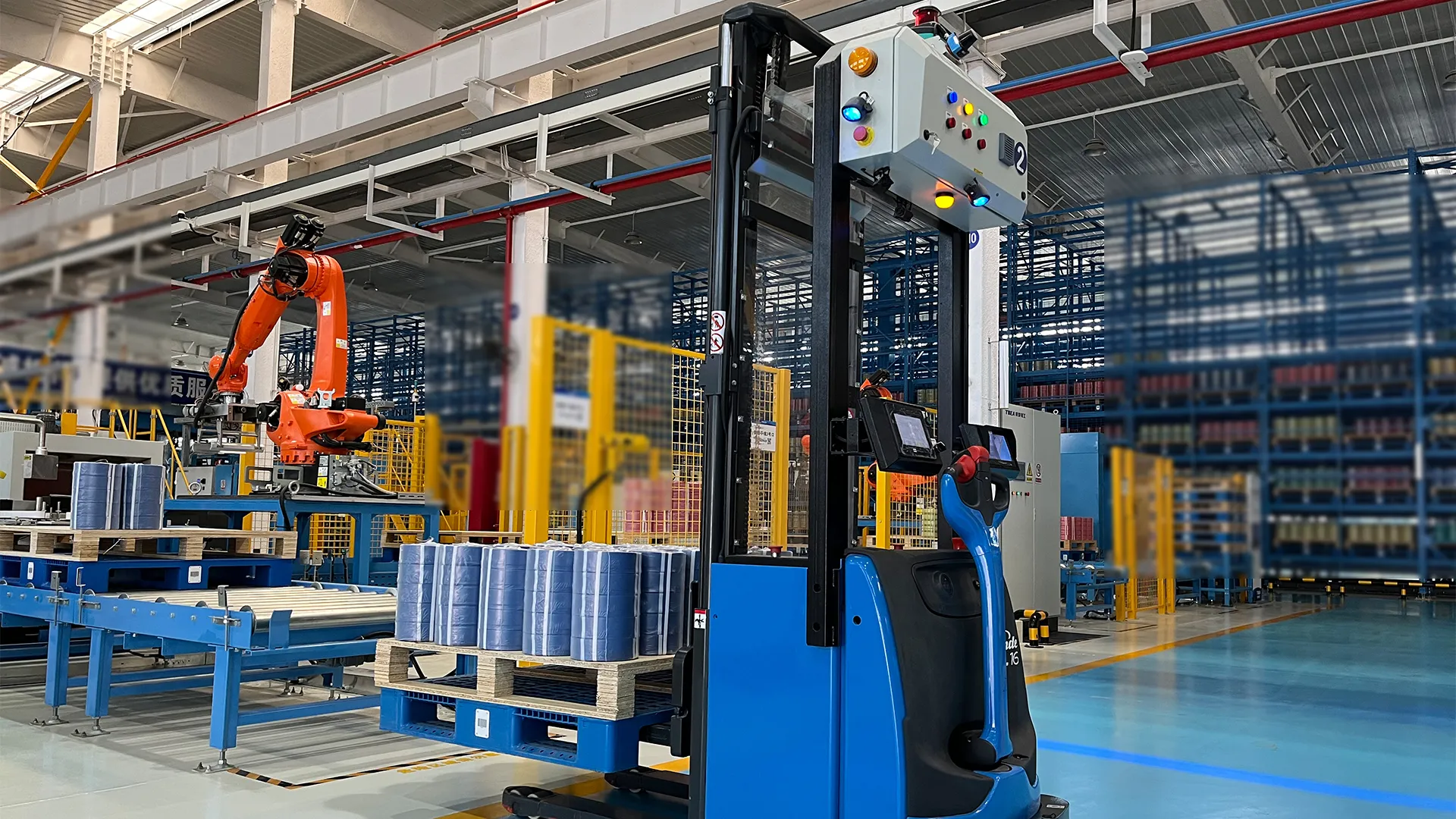
AGV, or Automated Guided Vehicle, is an intelligent vehicle used in industrial settings for the automated transport of goods. It moves along pre-set routes or responds to environmental changes via its built-in navigation system, thereby enhancing logistics efficiency and reducing labor requirements. Key technologies include path planning, navigation and positioning, and obstacle avoidance.
▎The Dilemma Facing Cable Manufacturers
Amid product diversification and rising labor costs, enterprises confront a series of challenges in logistics handling: manual handling expenses grow increasingly costly alongside persistent labor cost inflation; factory space becomes increasingly constrained, demanding more efficient handling solutions to optimize space utilization; heavy cable products harbor inherent safety risks during transportation; Frequent changes in production orders demand greater flexibility and rapid responsiveness from production lines.
Rigid conveying methods such as RGVs, rail-guided vehicles, roller conveyors, and gantry robots also constrain production line flexibility, convenience, and continuity. These factors collectively drive enterprises to seek smarter, more economical, and safer material handling solutions.
▎Why the Cable Industry Prefers AGVs
AGVs offer flexible route configuration and low setup costs. By fully utilizing pedestrian and forklift aisles, they enhance floor space utilization in workshops while addressing the shortcomings of rigid transport methods. When integrated with rigid transport systems, they bridge the “last 100 meters” of the material handling process.
Simultaneously, AGV systems can exchange data and integrate with MES (Manufacturing Execution System), WMS (Warehouse Management System), and LCS (Line Control System). This enables fully automated operations such as order-triggered movement, material-on-demand assembly, empty pallet unloading, and proactive material delivery, significantly boosting production efficiency and material information accuracy.
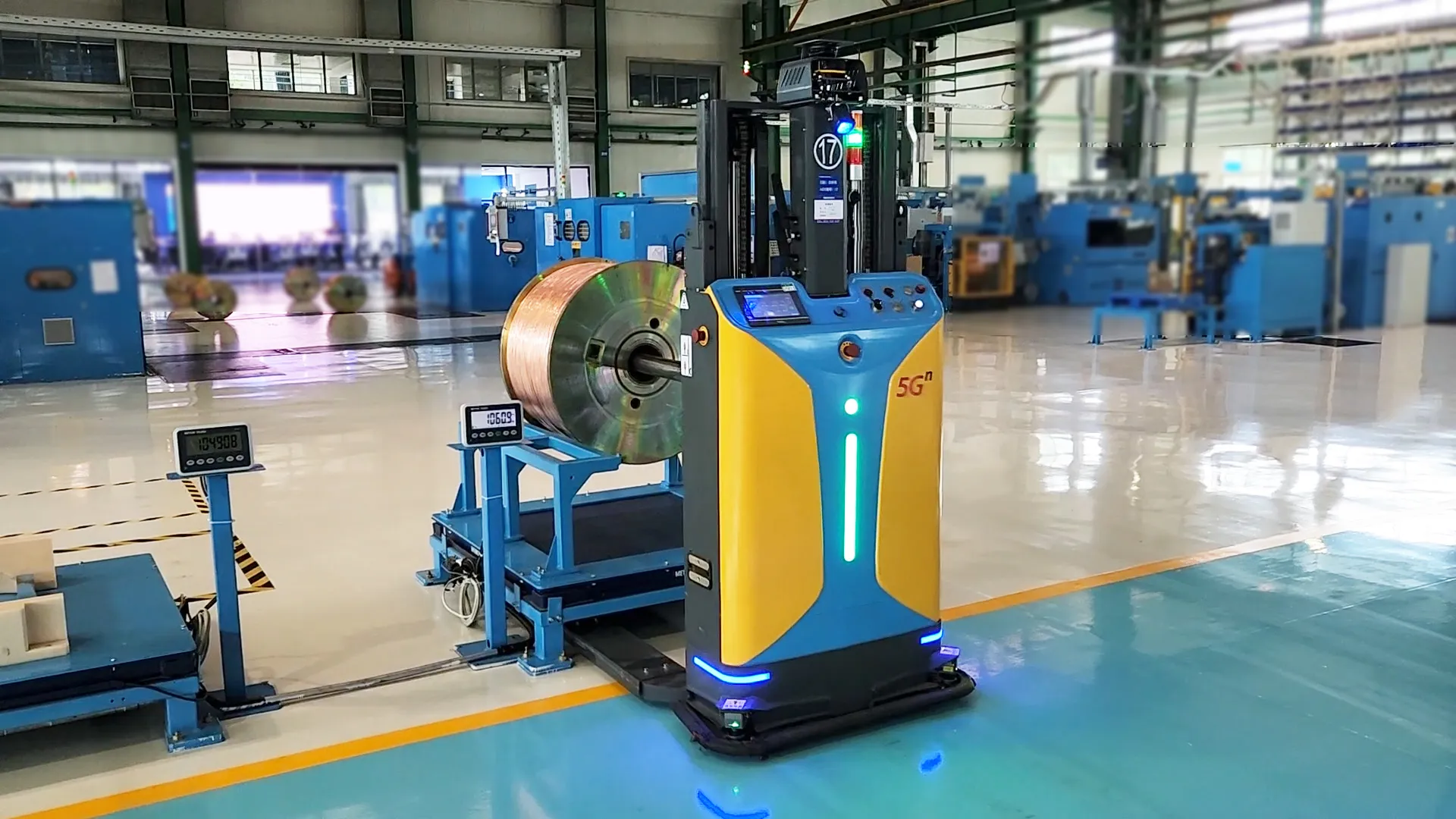
To address diverse material handling requirements in cable production, SINGCHEER has introduced over ten distinct AGV models, including forklift-style, backpack-style, pole-mounted, and rotating pallet types. When integrated with elevators, hoists, and rail conveyors, these AGVs enable cross-production-line, cross-floor, and cross-facility material handling operations, significantly reducing transportation costs.
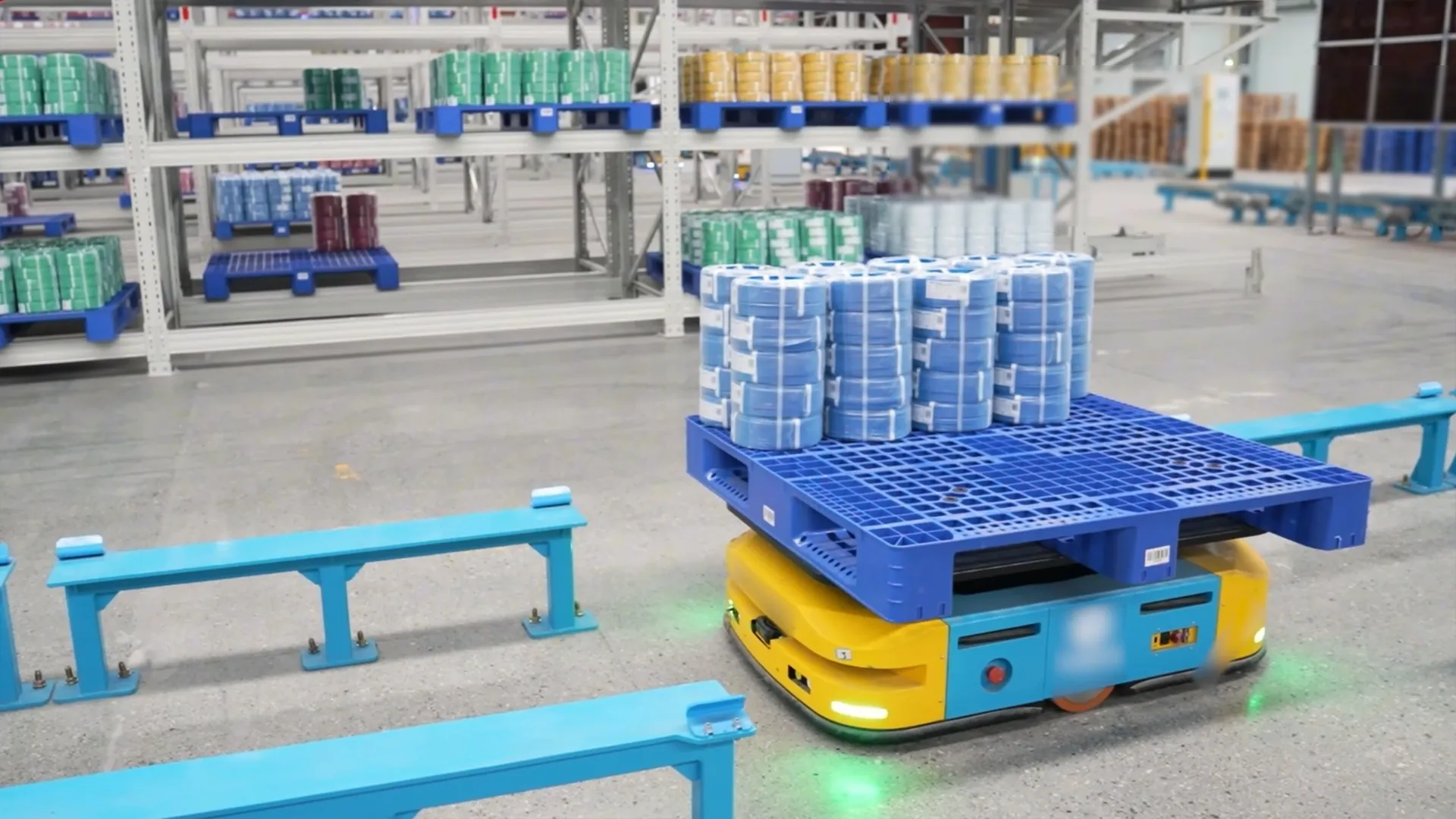
During operation, AGVs generate vast amounts of production data. After collection and analysis, this data provides decision support for production optimization and predictive maintenance, further enhancing production efficiency and product quality. This drives the rapid advancement and development of flexible production lines, automated factories, and intelligent logistics.
Additionally, AGVs play a crucial role in facility cleaning, ensuring production line cleanliness, extending equipment lifespan, and reducing maintenance costs.
By integrating with SINGCHEER's proprietary SiSCADA system, seamless device connectivity is achieved, enabling real-time visibility into production status and safeguarding manufacturing operations.


